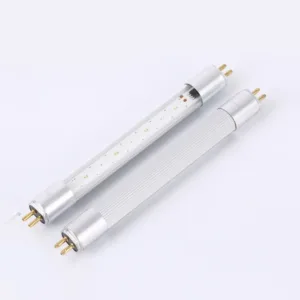
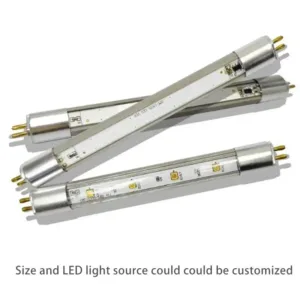
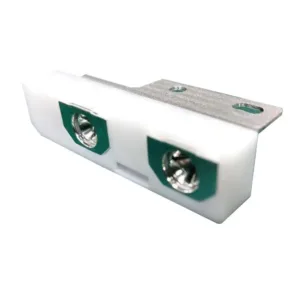
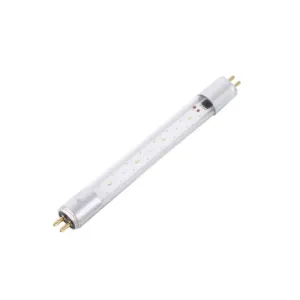
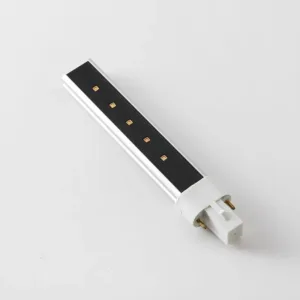
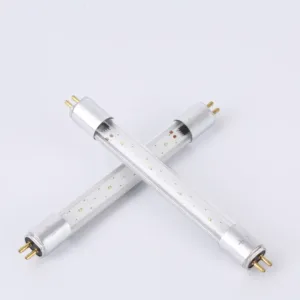
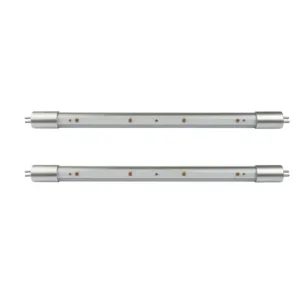
YOYO-UV is a professional UVC LED module manufacturer providing standard and custom deep UV light sources for water treatment, air treatment, surface disinfection, analytical equipment and OEM product development.
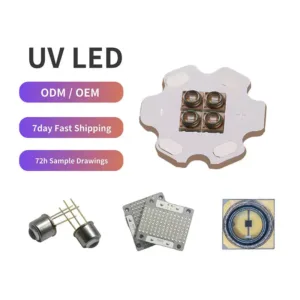
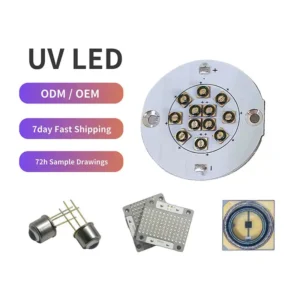
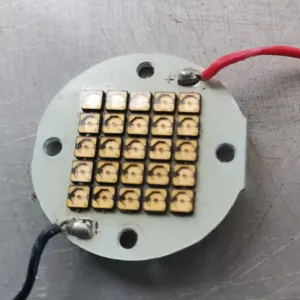
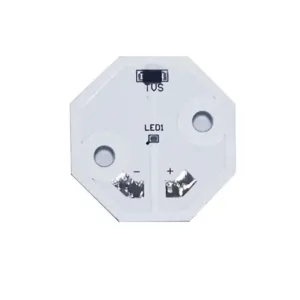
Our UVC LED modulesare available in wavelengths including 255nm, 265nm and 275nm, with other wavelength options available for customized projects. We manufacture compact PCB modules, ceramic modules, COB modules, high-power UVC LED arrays and complete light-source assemblies for integration into professional equipment.
As a factory, we provide OEM and ODM UVC LED module services from prototype development to volume production. Wavelength, radiant power, PCB dimensions, voltage, current, optics, wiring, connectors and thermal structures can be customized according to the final system.
255nm, 265nm and 275nm UVC LED Modules
Different UVC wavelengths can be selected according to the application, target microorganism, optical requirements and system design.
Our available solutions include:
255nm UVC LED modules
265nm UVC LED modules
275nm UVC LED modules
Custom UVC wavelengths
Single-wavelength modules
Multi-LED UVC arrays
High-power UVC COB modules
A wavelength should not be selected alone.
Radiant power, irradiance at the target, exposure time, optical distribution and operating conditions should also be considered when designing a UVC system.
For OEM projects, our engineers can help customers select a suitable LED configuration based on the application and available installation space.
UVC LED Modules for Water Treatment
Our UVC LED modules for water treatment can be integrated into point-of-use water purifiers, drinking-water equipment, RV water systems, water dispensers, faucets, RO systems and other OEM water-treatment products.
Water disinfection performance depends on more than the electrical power or radiant output of the LED.
Important system parameters may include:
Flow rate
UV transmittance of the water
Required UV dose
Irradiation distance
Reactor or chamber geometry
LED position
Residence time
Water quality
Optical design
Thermal conditions
For this reason, a UVC LED module rated at a certain radiant power should not automatically be assumed to provide the same disinfection result in every water system.
The complete water path and UVC chamber should be evaluated together.
For custom projects, tell us the expected flow rate, water conditions, available chamber dimensions and required performance target. We can then recommend a suitable starting configuration for prototype testing.
Understanding Radiant Power, Irradiance and UV Dose
These three specifications are related, but they are not the same.
Radiant power, normally shown in milliwatts (mW), describes the total UV optical output of the LED or module.
Irradiance, normally shown in mW/cm², describes how much UV power reaches a specific surface area at a defined distance.
UV dose, normally shown in mJ/cm², depends on irradiance and exposure time.
This distinction is important for water, air and surface applications.
Two UVC LED modules with similar radiant power can produce different irradiance and dose distributions because of differences in beam angle, optics, mounting position and treatment geometry.
For OEM equipment, the module should therefore be evaluated inside the final optical and mechanical system.
UVC LED Modules for Air and HVAC Equipment
Our UVC LED modules for air disinfection can be developed for integration into HVAC systems, air purifiers, air-conditioning equipment and enclosed air-treatment devices.
For moving air, effective module design should consider:
Airflow
Duct dimensions
Air velocity
LED position
Irradiation distance
Exposure time
Reflective surfaces
Heat dissipation
Compact PCB modules may be suitable for space-limited appliances, while higher-output LED arrays can be developed for systems that need a larger irradiation area.
Custom brackets, PCB shapes, connectors and thermal structures are available for equipment manufacturers.
UVC LED Modules for Surface Disinfection
UVC LED modules can also be integrated into enclosed equipment designed for controlled surface irradiation.
Applications may include:
Equipment chambers
Appliance interiors
Packaging equipment
Laboratory systems
Industrial processing equipment
Automated disinfection systems
Surface treatment performance depends strongly on distance, beam angle, exposure time and shadowing.
Objects or areas that are not directly reached by the UV light may receive a much lower dose.
For this reason, optical layout and LED positioning should be considered early in the equipment design.
High Power UVC LED Modules and COB Arrays
For applications requiring higher UV output, we manufacture high power UVC LED modules, COB modules and LED arrays.
Multiple UVC LEDs can be arranged on aluminum, copper, ceramic or other suitable thermal substrates according to project requirements.
Customization may include:
LED quantity
Series and parallel configuration
Radiant power
PCB dimensions
PCB material
Electrical input
Optical lenses
Beam angle
Heat sink
Air cooling
Water cooling
Wiring and connectors
Mechanical housing
High electrical wattage does not always mean high usable UV output.
LED efficiency and operating temperature should also be considered when comparing UVC modules.
Thermal Management for UVC LED Modules
Thermal management is especially important in high power UVC LED modules.
The LED junction temperature can affect UV output, stability and operating life.
A complete module design may need to consider:
Drive current
PCB thermal conductivity
Thermal interface material
Heat sink size
Ambient temperature
Airflow
Continuous or intermittent operation
For higher-power projects, forced-air or water cooling may be required.
Our engineers can work with the available equipment space to develop a suitable PCB and thermal structure instead of treating the UVC LED as an isolated component.
Optical Design and Beam Angle
The optical system determines where the UV energy goes.
Depending on the application, we can provide different LED layouts, lenses and beam angles.
A narrow optical beam may help produce higher irradiance in a smaller target area or at a longer working distance.
A wider beam may be better for covering a larger surface or chamber.
The required beam angle should therefore be selected together with:
Working distance
Irradiation area
Module position
Required irradiance
Chamber geometry
For custom equipment, these parameters can be evaluated during prototype development.
Waterproof UVC LED Modules
Water-treatment and appliance applications may require additional protection against moisture.
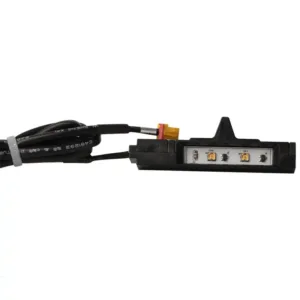
Depending on the project, we can develop UVC LED assemblies with customized sealing, housing, wiring and connector structures.
However, waterproof requirements should be defined according to the real installation environment.
A module mounted near a water line has different sealing requirements from a component designed for direct immersion.
Tell us whether the module will operate in dry air, humid air, splash conditions or direct water contact so that the structure can be designed accordingly.
How to Select a UVC LED Module
For an OEM project, do not select a module by wavelength and wattage alone.
We recommend considering:
Target wavelength
Required radiant power
Required irradiance or UV dose
Working distance
Irradiation area
Flow rate or airflow
Available installation space
Input voltage and current
Operating time
Cooling conditions
Optical requirements
Environmental and waterproof requirements
For water-treatment projects, also provide information about water flow, UV transmission or water quality when available.
This information helps us recommend a more appropriate starting design.
System Validation Matters
A UVC LED module is a light-source component, not a guarantee of the final disinfection performance of the finished equipment.
Final results depend on the target microorganism, UV wavelength, delivered UV dose, treatment geometry, exposure conditions, water or air properties and other system factors.
Equipment manufacturers should verify the final product under the intended operating conditions and according to applicable standards or regulatory requirements.
Prototype testing is strongly recommended before volume production.
UVC Safety for OEM Equipment
Direct UVC radiation can be hazardous to the eyes and skin.
Our modules are designed as components for integration into properly engineered equipment.
The final product should include suitable safety measures based on its application, which may include:
Enclosed UV chambers
UV-resistant shielding
Safety interlocks
Automatic shutoff
Exposure control
Warning labels
Protective mechanical structures
Users should never look directly at an operating UVC LED or expose people or animals to an unprotected UVC source.
Custom OEM & ODM UVC LED Modules
YOYO-UV provides OEM and ODM UVC LED module development for equipment manufacturers, distributors, engineering companies and product developers.
Customization options include:
255nm, 265nm and 275nm wavelengths
Custom wavelengths
Radiant power
PCB dimensions and shape
Aluminum, copper or ceramic PCB
COB and multi-LED arrays
Voltage and operating current
Beam angle and lenses
Wiring and connectors
Heat sinks
Air or water cooling
Waterproof structures
Mechanical housing
We support projects from prototype design and sample testing to production.
Whether you need a compact 275nm UVC LED module, a 265nm UVC LED light source, a high power UVC COB module, or a custom module for water, air or surface-treatment equipment, our factory can develop a solution around your electrical, optical, thermal and mechanical requirements.
Contact YOYO-UV with your wavelength, required UV output, dimensions, voltage and application to discuss a custom UVC LED module or OEM/ODM project.