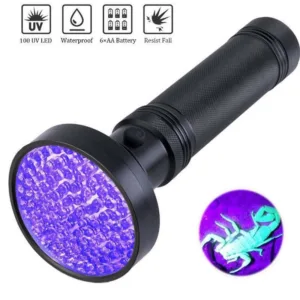
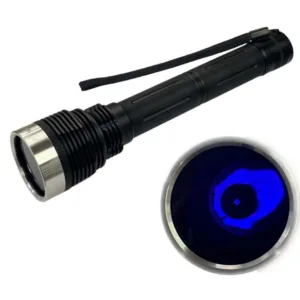
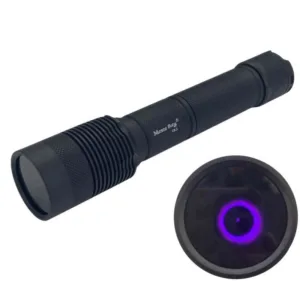
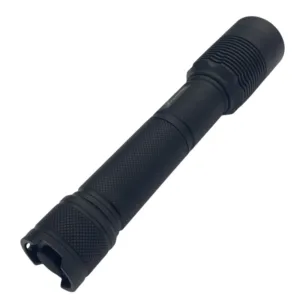
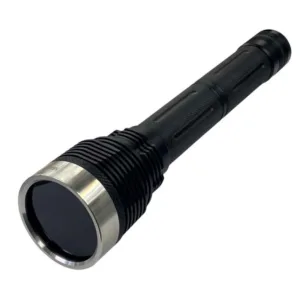
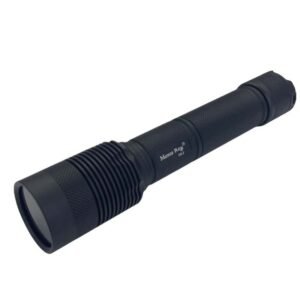
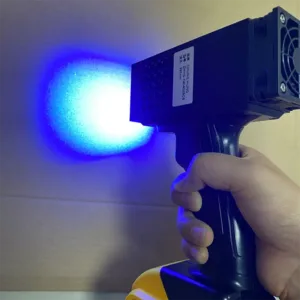
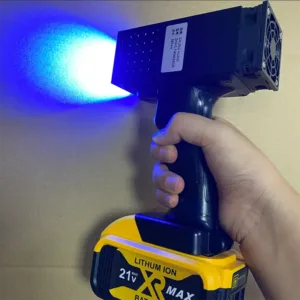
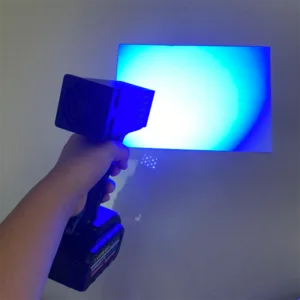
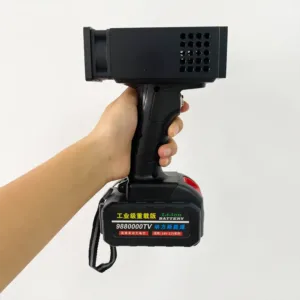
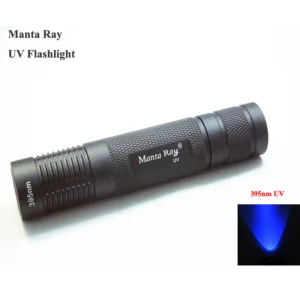
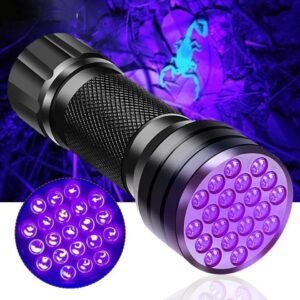
YOYO-UV produces and supplies UV LED flashlights that can be utilized for fluorescence inspection, leak detection, mining, industrial testing, UV curing, and more.
YOYO-UV products include common 365nm and 395nm UV-A flashlights, as well as specialized UV wavelength solutions for OEM and ODM projects.
We manufacture compact UV torches, powerful rechargeable UV flashlights, filtered 365nm blacklights and other custom UV LED handheld light sources. Wavelength, UV LED, optical filter, radiant output, beam angle, battery, housing, switch and mechanical structure can be customized to your application.
We assist equipment manufacturers, distributors and professionals in developing prototype flashlights, testing samples, private label flashlights and bulk production projects.
365nm and 395nm UV LED Flashlights
One of the key parameters of a UV LED flashlight is its wavelength.
Most popular UV wavelengths for portable blacklight applications are 365nm and 395nm.
365nm UV Flashlights
365nm UV flashlight emits UV-A radiation closer to the visible violet region than 395nm.
That means that 365nm will generally emit less visible purple light and create a better fluorescence contrast when used in conjunction with a proper UV-pass filter.
Common applications of 365nm flashlights include:
Fluorescence inspection
Mineral and rock inspection
Yooperlite hunting
Uranium glass inspection
Currency and document verification
Security marking detection
Automotive AC leak detection
Oil and UV dye inspection
Industrial cleanliness inspection
Forensic applications
Non-destructive testing
UV adhesive and resin curing
365nm is preferred by professionals as interference with visible light can hinder visibility of weak fluorescence.
395nm UV Flashlights
395nm UV flashlight works close to the visible violet region.
Higher emission of violet light can give the impression of increased brightness without implying higher UV radiation.
The most widespread applications for 395nm UV lights are:
General blacklight inspection
Scorpion detection
Pet stain inspection
UV dye detection
Fluorescent decorations
Glow materials
Outdoor exploration
General-purpose UV inspection
And in some cases a cost effective alternative to a filtered 365nm flashlight.
365nm vs 395nm UV Flashlight: Which One to Choose?
No wavelength is universal for every application.
Choose 365nm for better fluorescence contrast and reduced visible light interference.
Choose 395nm for general visible violet illumination when filtered 365nm is not required.
The target material is another factor to consider.
As different fluorescent materials react differently to various wavelengths, a professional user must test the target material before selecting a flashlight.
UV Flashlights with ZWB2 Filters
A ZWB2 filter or similar UV-pass black filter can be installed in a UV flashlight to remove visible light emissions.
This option is especially efficient in case of 365nm UV LED.
The filter does not increase the total output of the LED, but it removes visible violet and stray light that can illuminate the background.
Consequently, it can lead to:
Darker background
Reduced visible purple glare
Higher fluorescence contrast
More visible weak fluorescence
This is why 365nm UV flashlights with ZWB2 filters are useful in mineral inspection, forensics, counterfeiting detection, leaks testing and other applications where fluorescence contrast is important.
One more thing to take into account is filter transmission. Every optical filter has its own spectral transmission curve and thus should be included in the evaluation.
Radiant Power vs Electrical Power
Electrical wattage and UV optical power of a flashlight is not the same.
Flashlight branded as 10W UV flashlight can consume approximately 10W of electrical power, but not all electrical power gets converted into ultraviolet radiation.
Some part of electrical power turns into heat.
For professional comparison of flashlights, the following specifications should be taken into account:
Peak wavelength
Radiant flux or radiant power
Irradiance
Test distance
Beam diameter
Electrical input
LED operating current
Runtime
Thermal regulation
That is why two flashlights with the same electrical wattage can differ greatly in terms of UV radiation.
Based on the available test data, YOYO-UV can provide additional UV optical specifications.
UV Irradiance and Working Distance
Irradiance defines the power reaching a defined area.
And it should always be considered in combination with working distance.
For example:
20mW/cm² at 15cm
is not the same specification as:
20mW/cm² at 50cm.
Working distance, reflector design, optical lens and LED output all affect the irradiance of the flashlight.
To select a suitable UV LED, reflector or lens structure for your application, tell us:
Required working distance
Target area
Required UV irradiance
Beam diameter
Our engineers will be happy to help you.
Beam Shape: Spot vs Flood UV Flashlights
UV flashlight can have a concentrated spot or wide flood beam.
A spot beam is useful when high irradiance or greater working distance is required for a small area.
Flood beam is helpful when scanning floors, walls, equipment, mineral areas and other big surfaces.
Both types of beams are not automatically better than each other.
It depends on distance and size of the target.
For OEM projects, reflector diameter, lens, LED position and beam angle can be customized.
UV Flashlights for Fluorescence Inspection
UV light is widely used to activate fluorescent materials that can be invisible in normal visible light conditions.
Such materials can be:
Security markings
Anti-counterfeit printing
Fluorescent dyes
Minerals
Petroleum leak dyes
Fluorescent penetrants
Optical brighteners
Scientific samples
Correct wavelength of the flashlight should correspond to the response of the fluorescent material.
If fluorescence is weak, filtered 365nm UV flashlight can reduce interference with visible light and help with improving the contrast.
UV Flashlights for Mineral and Yooperlite Hunting
365nm UV flashlights are widely used by mineral collectors and field researchers.
Fluorescent minerals absorb UV energy and emit light in different colors.
High output UV flashlight allows to scan larger area and filtered UV beam helps to detect fluorescent minerals against the background.
Main factors for outdoor mineral inspection include:
UV wavelength
Radiant output
Beam coverage
Working distance
Runtime
Battery capacity
Waterproofing
Heat management
In the course of long field session, UV output for extended period of time can be more valuable than peak UV power.
UV Flashlights for Leak Detection
Various fluorescent dyes can be added to fluids for automotive, HVAC and industrial leak detection systems.
When such a dye is present, 365nm UV flashlight can be used to make the dye glow against the dark background.
Typical applications include:
Automotive AC systems
Refrigeration equipment
Hydraulic systems
Lubrication systems
Industrial pipelines
For each application, the correct flashlight wavelength should be selected according to the recommendation of fluorescent dye manufacturer.
UV LED Flashlights for NDT
Professional UV-A flashlights can also be manufactured for fluorescent penetrant testing and fluorescent magnetic particle inspection.
Both of these applications require highly controlled performance compared to common consumer blacklight.
Depending on the project, key parameters of such flashlight can include:
Peak wavelength
UV-A irradiance
Beam uniformity
Visible light emission
Filter performance
Thermal stability
Output regulation
For the projects that require compliance with a certain NDT standard such as ASTM E3022, the whole flashlight model – LED, filter, optics, electronics, cooling system and power supply – needs to be evaluated.
Standard UV flashlight cannot be marked as ASTM E3022 compliant unless it was really tested.
Rechargeable UV LED Flashlights
Rechargeable designs are increasingly used for professional UV inspection.
Depending on required size and runtime, UV flashlights can have:
18650 Li-ion batteries
21700 Li-ion batteries
AA or AAA batteries
Built-in rechargeable batteries
USB-C charging capability can also be included into a suitable design.
Not only the capacity of the battery determines the runtime of a UV flashlight.
Actually, the runtime is determined by LED power, drive current, efficiency, operation mode and thermal regulation.
High power UV LED generates a lot of heat, which can cause automatic reduction of UV output.
Thermal Management for High Power UV Flashlights
Thermal management is important for a high power UV LED flashlight.
If the LED becomes overheated, the output can decrease and its lifetime can be shortened.
Professionally designed flashlight can use:
Aluminum flashlight body
Copper LED PCB
Aluminum PCB
Thermal interface material
Additional heat transfer surface
Temperature control
Automatic step down
LED, PCB, flashlight body and driver form a thermal system.
Specialized UVB and UVC LED Flashlights
In addition to common 365nm and 395nm UV-A flashlights, specialized handheld UV sources of shorter wavelengths can be manufactured for professional OEM applications.
Such products can be used for scientific research, fluorescence analysis, laboratory equipment, material inspection and other controlled applications.
Shortwave UVB and UVC flashlights need much more strict safety controls compared to ordinary blacklight flashlights.
They must never be used as general illumination.
Finished product should include necessary protective measures according to the wavelength, output and application.
UV Safety
A UV flashlight must never be treated as a regular visible light flashlight.
Do not look into UV LED and intentionally expose eyes and skin to high intensity UV beam.
Suitable UV protection should be considered for professional or prolonged use.
And even higher attention is required when dealing with UVB and UVC wavelengths.
When developing OEM product, necessary safety features may include:
Protective eyewear
Warning labels
Safety interlocks
Controlled activation
Beam shielding
Automatic shutoff
Child-resistant operation
Necessary protection measures depend on wavelength, output and intended use.
Custom UV LED Flashlight Manufacturer
YOYO-UV offers OEM and ODM UV LED flashlight development for distributors, industrial customers, equipment producers and private label brands.
What Information Do We Need for an OEM UV Flashlight?
For a custom UV LED flashlight, please provide us with as much of the following information as possible:
Required wavelength
Target application
Required UV output or irradiance
Working distance
Target beam diameter
Filter requirement
Battery type
Required runtime
Flashlight dimensions
Waterproof requirement
Charging method
Quantity
If you lack this information, just tell us about the application.
Our engineers will recommend a wavelength, LED, optical and mechanical structures of the flashlight.
Regardless of whether you need a 365nm UV flashlight with ZWB2 filter, a 395nm blacklight flashlight, professional UV inspection torch or custom-made UV LED handheld light source, YOYO-UV will assist you in developing prototype or producing bulk quantities.