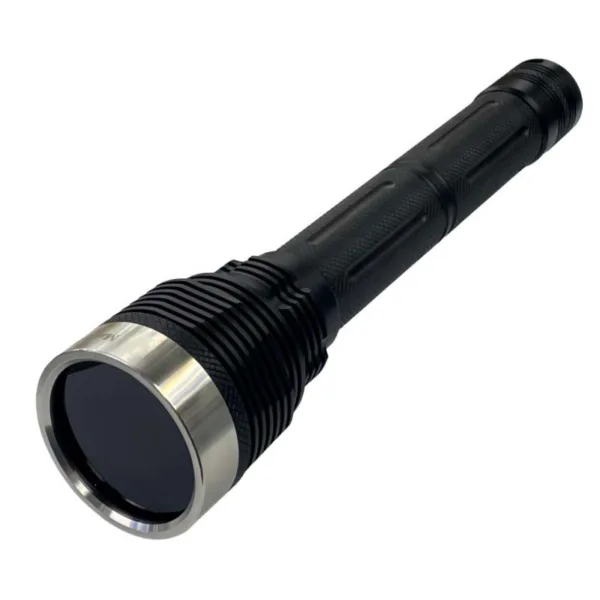
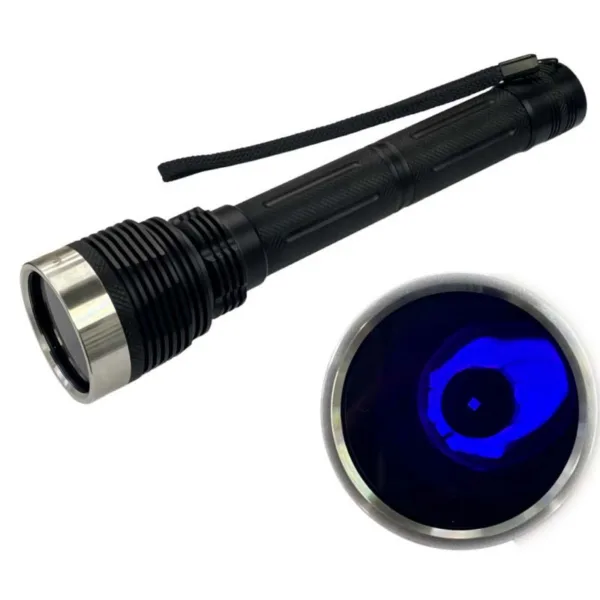
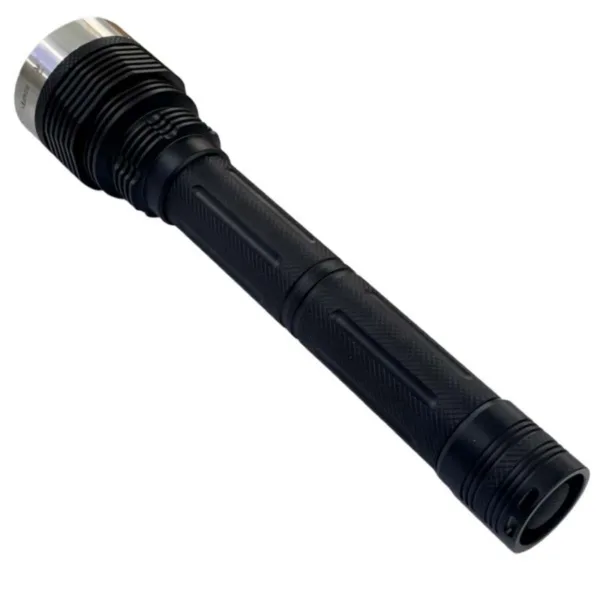
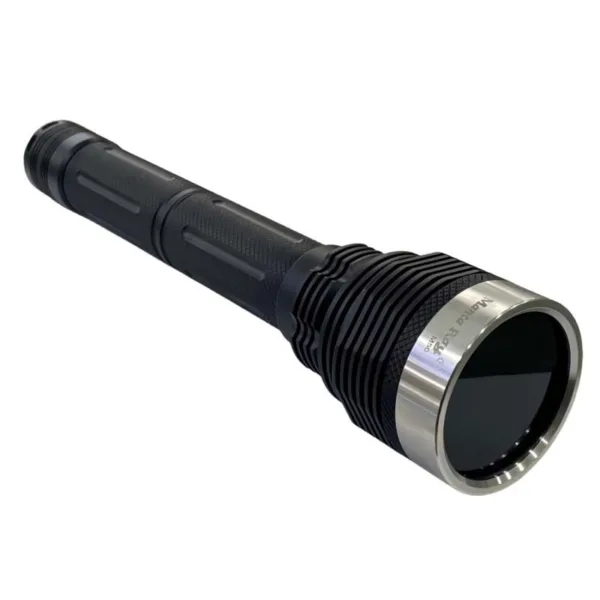
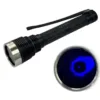
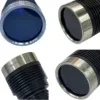
uv b flashlight 15W with ZWB3 Filter
High-Power 295nm and 310nm UV B Flashlight
Manta Ray UV B flashlight is a portable high-power ultraviolet light source offered in 295±5nm and 310±5nm wavelength configurations.
Combining 15W electrical input and 100mW, 70mW, or 40mW radiant output options according to the selected configuration.
Unlike product descriptions that show only electrical wattage, this flashlight also offers irradiance values measured at specific working distances.
The specified UV irradiance is:
| Measurement Distance | Irradiance | Spot Size |
|---|---|---|
| 5cm | 5000μW/cm² | Ø50mm |
| 10cm | 1800μW/cm² | Ø70mm |
| 20cm | 795μW/cm² | Ø80mm |
This information allows engineers, laboratories, mineral collectors, scientists, researchers, and equipment developers to compare working distance, illuminated area, and UV intensity.
295nm or 310nm UVB Wavelength Options
There are two wavelength configurations available for the UV B flashlight.
295±5nm version offers a shorter UVB wavelength suitable for specialized optical experiments, fluorescence tests, material reaction testing, laboratory studies, and UV equipment development.
310±5nm version offers a midwave UVB light source suitable for such applications as fluorescent mineral inspection, phosphor testing, material fluorescence analysis, and UV equipment development.
It is always recommended to select the wavelength that corresponds to the material’s response spectrum or test requirements.
The material reacting to 365nm UVA does not necessarily react the same way to 295nm or 310nm UVB.
15W Electrical Power and Defined Radiant Output
Electrical wattage and UV radiant power are different specifications.
This UV B flashlight is characterized by the following parameters:
| Specification | Value |
|---|---|
| Electronic Power | 15W |
| Radiant Power | 100 / 70 / 40mW |
| Wavelength | 295±5nm / 310±5nm |
| Input Voltage | 6V–12V |
Indicating both specifications allows professional buyers to better evaluate the UV source.
The radiant-power configuration should be specified during the order.
High UV Irradiance at Close Range Inspection
UV intensity varies significantly with the working distance.
At 5cm measurement distance the specified irradiance is 5000μW/cm².
At 10cm – 1800μW/cm².
At 20cm – 795μW/cm².
So the UV B flashlight is convenient to use in controlled close-range inspection and testing when users have to know how UV intensity changes with the increase of distance between the flashlight and the target.
For consistent comparison, the same flashlight angle, target location, measurement distance, environmental conditions, and measuring tool must be used.
Defined Spot Size at Various Working Distances
As the working distance is increased, the beam becomes larger.
The specified spot size is:
- Ø50mm at 5cm
- Ø70mm at 10cm
- Ø80mm at 20cm
Spot-size specifications allow users to choose the right distance depending on the illumination area that is needed.
For more intensive illumination with smaller area, users can use shorter working distance.
For the larger area, the flashlight can be placed farther from the target considering the corresponding decrease in irradiance.
ZWB3 Black Filter Glass
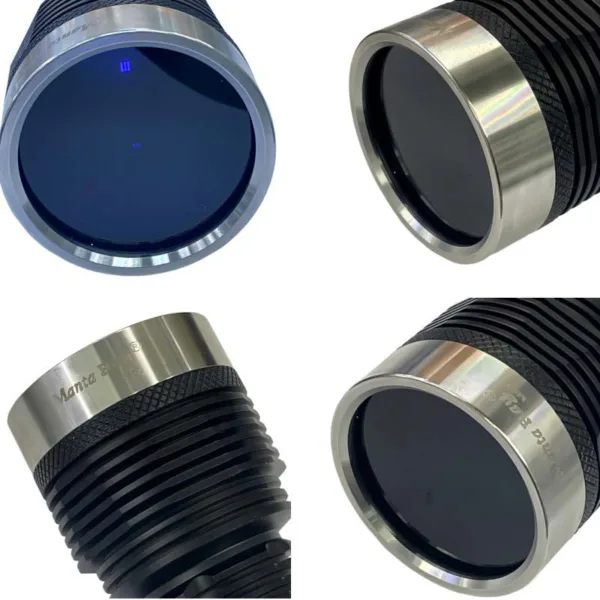
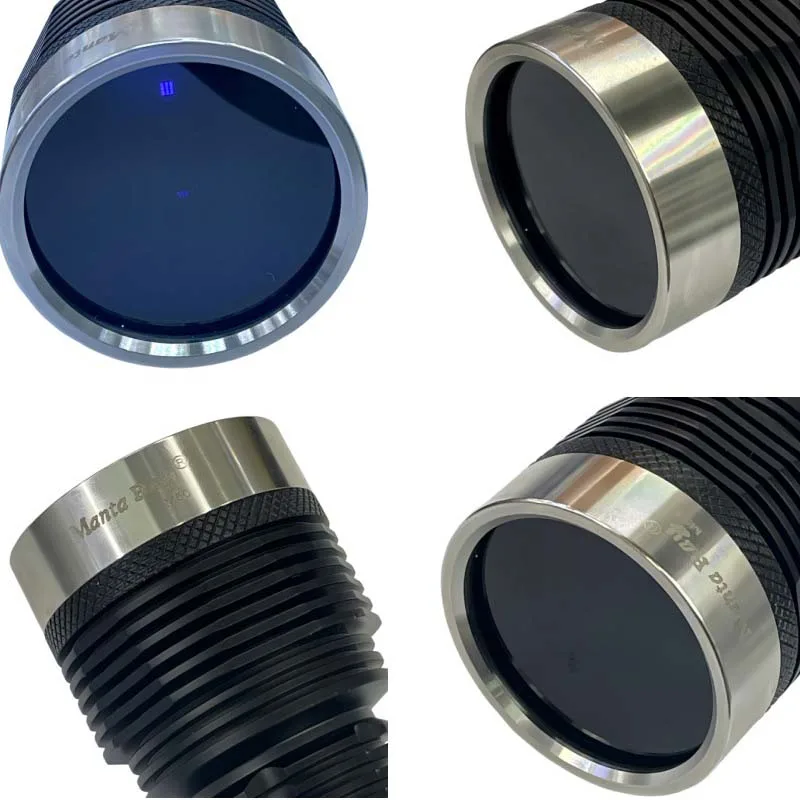
The flashlight uses ZWB3 black filter glass.
According to the product specification, this filter is used to filter excess impurities and unnecessary light to get cleaner UV output for fluorescence inspection and optical testing.
It is especially helpful when visible light leakage lowers the contrast between the inspected material and its UV-induced fluorescence.
As different wavelengths and optical systems have different transmittance, the filter efficiency can be evaluated together with the whole flashlight configuration, and not only filter name.
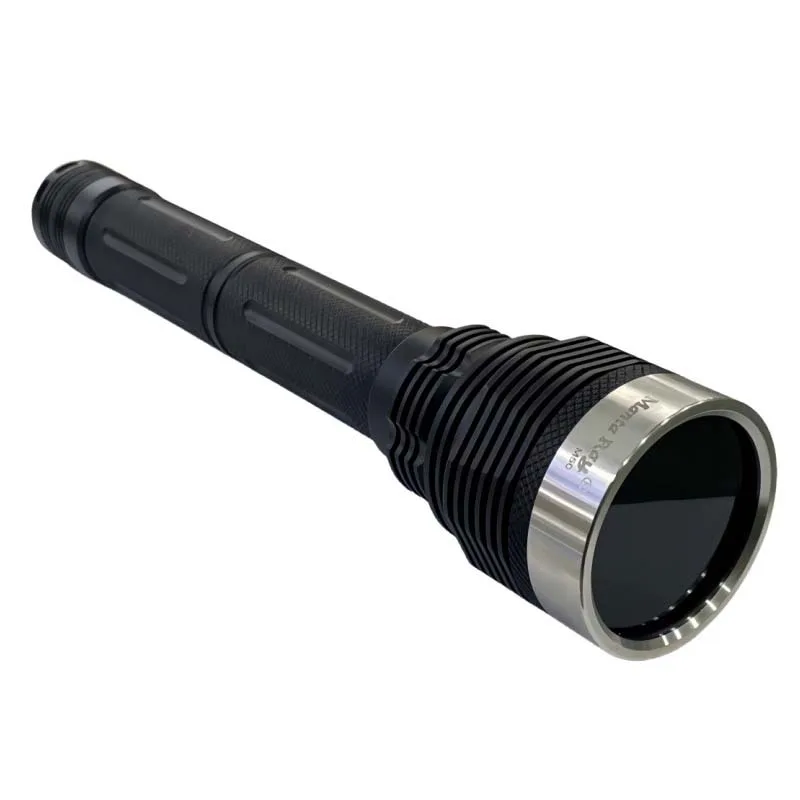
45 × 40mm Smooth Spotlight Reflector
A 45 × 40mm vacuum-electroplated aluminum-alloy smooth spotlight reflector is used in the flashlight head.
Such reflector is designed to provide:
- Large illuminated spot;
- Intensive UV output;
- Longer working range;
- Better controlled beam direction.
This optical structure helps to concentrate UV energy on the inspection area.
Up to Four Hours of Operation Time
The UV B flashlight uses:
2 × 21700 rechargeable batteries
The specified operation time is about 4 hours.
The product package consists of the following items:
- 1 × UV B flashlight;
- 2 × batteries;
- 1 × charger.
Real-time operation time may vary depending on battery condition, operating temperature, LED configuration, current regulation, and temperature control.
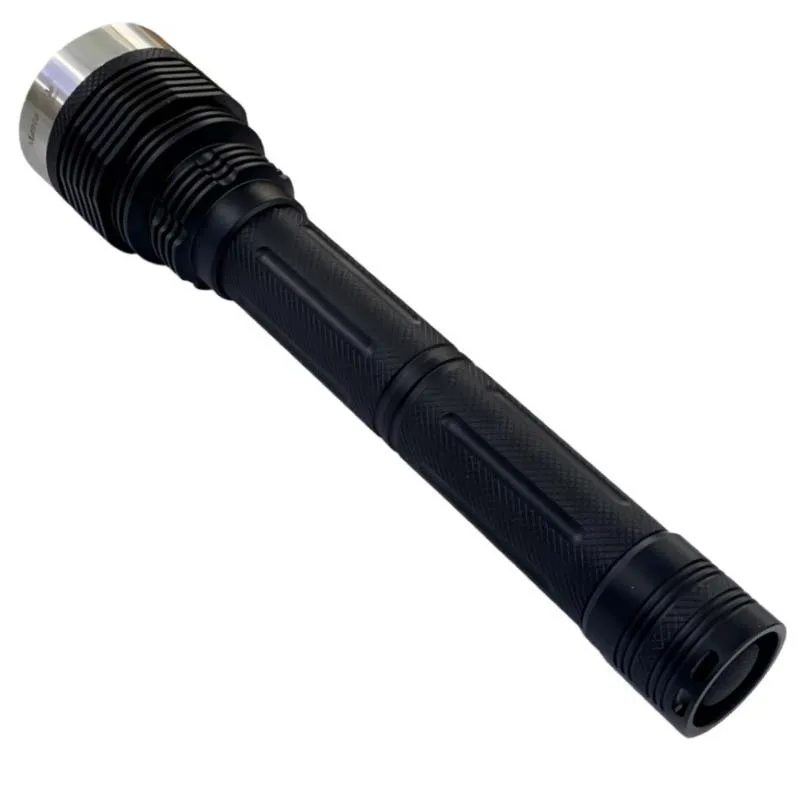
Single-Mode Tail Switch
The flashlight has a simple 1-mode design.
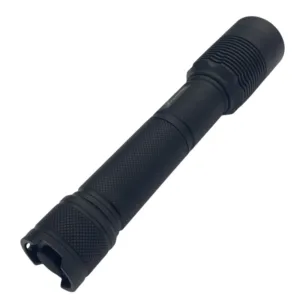
Operation is controlled by an ON/OFF tail switch.
Single-mode design eliminates unnecessary flashing or brightness modes.
Low-Voltage Protection
Low-voltage protection is included in the flashlight.
The low-voltage limit is set to 5.6V.
This function is aimed at decreasing the risk of excessive discharge of batteries during flashlight operation.
Reverse-Connection Protection
Reverse battery connection protection is included in the product.
In case the batteries are inserted with wrong polarity, the flashlight won’t start, and the circuit won’t burn.
Correct the batteries’ polarity before attempting to operate the flashlight.
55°C Temperature Control
High-power UV LEDs produce heat during operation, so the temperature control is necessary for consistent output and components’ protection.
The temperature control setting of this UV B flashlight is 55°C.
When the temperature inside the flashlight reaches 55°C, the current will start to decrease after approximately 20 seconds to maintain operating temperature.
This protection works in combination with flashlight’s built-in temperature control structure.
Built-In Thermal Conducting Structure
The flashlight uses built-in compartment design with good thermal conductivity and heat dissipation properties.
Efficient heat conducting helps to dissipate the heat from the high-power LED and driver during the operation.
The flashlight also uses end-face conducting and phosphor-bronze rear pressure spring to improve electrical conductivity and reduce internal resistance.
Product Specifications
| Specification | Details |
|---|---|
| Brand | Manta Ray |
| Product Type | UV B Flashlight |
| Light Source | 5050 9-core 15W high power UVC LED |
| Electronic Power | 15W |
| Radiant Power | 100 / 70 / 40mW |
| Wavelength | 295±5nm / 310±5nm |
| Irradiance at 5cm | 5000μW/cm² |
| Irradiance at 10cm | 1800μW/cm² |
| Irradiance at 20cm | 795μW/cm² |
| Measurement Distance | 5cm / 10cm / 20cm |
| Spot Size at 5cm | Ø50mm |
| Spot Size at 10cm | Ø70mm |
| Spot Size at 20cm | Ø80mm |
| Input Voltage | 6V–12V |
| Operating Modes | 1 Mode |
| Switch | Tail ON/OFF Switch |
| Reflector | 45 × 40mm vacuum-electroplated aluminum-alloy smooth spotlight reflector |
| Filter Glass | ZWB3 Black Filter Glass |
| Battery | 2 × 21700 |
| Runtime | About 4 Hours |
| Low-Voltage Protection | 5.6V |
| Temperature Control | 55°C |
| Reverse-Connection Protection | Yes |
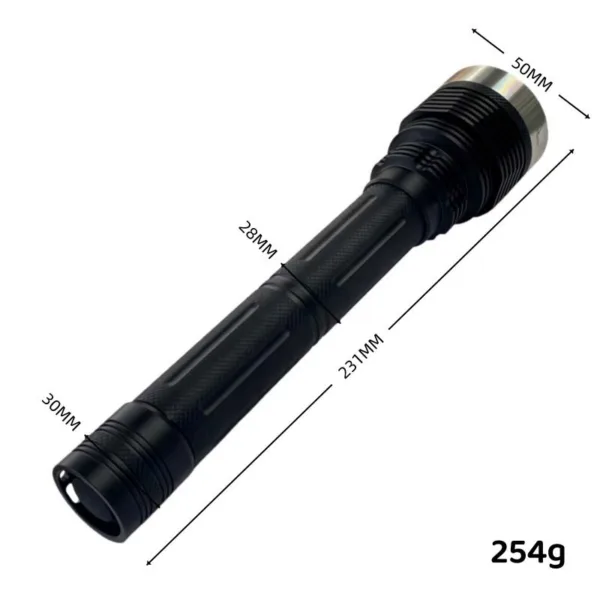
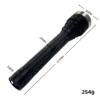
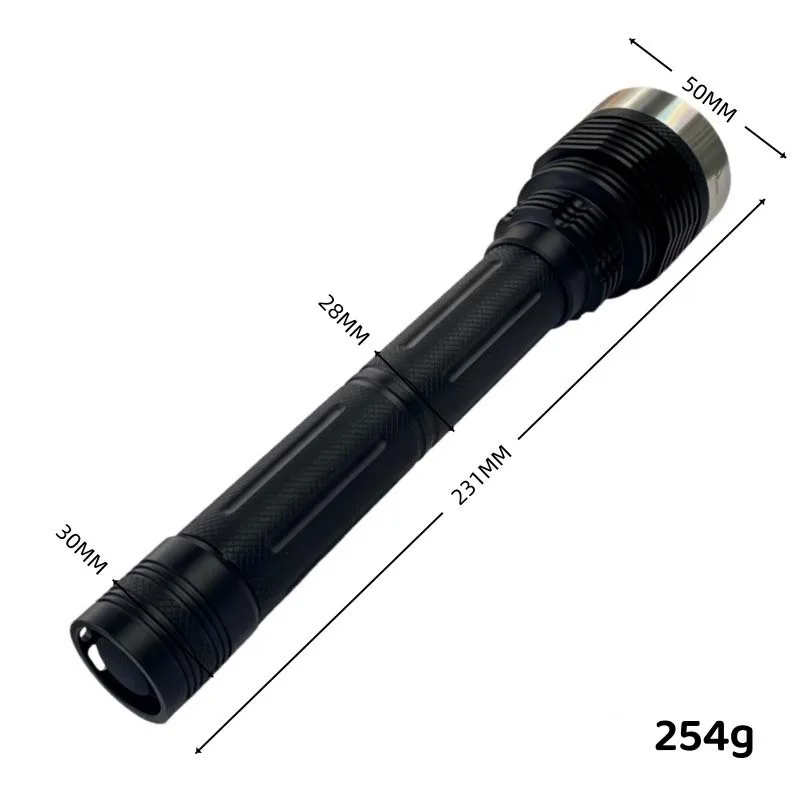
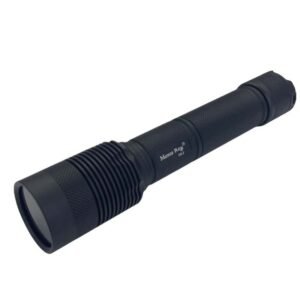
| Length | 231mm |
| Head Diameter | 50mm |
| Battery Compartment Diameter | 28mm |
| Package | 1 × Flashlight + 2 × Batteries + Charger |
Applications
This UV B flashlight can be used as a specialized UV light source for the applications requiring 295nm or 310nm radiation.
The typical applications include:
- Fluorescent mineral and rock inspection;
- Comparative fluorescent minerals;
- Inspection of phosphors and other fluorescent materials;
- Laboratory UV experiments;
- Optical-response testing;
- Material fluorescence analysis;
- Sensitive materials’ testing;
- Comparison of various UV wavelengths;
- Research purposes;
- Educational UV demonstration in controlled conditions;
- OEM products testing;
- Other specialized industrial inspection that requires a compatible UVB wavelength.
Before using the product, it is always necessary to verify that the wavelength is suitable for the target material.
A UV reactive material can react differently to 295nm, 310nm, 365nm, and other UV wavelengths.
Important Safety Precautions
This is a high-output UV B flashlight intended for controlled professional or technical use.
It is strictly forbidden to stare directly into the LED, reflector, and the emitted beam.
Do not shine the flashlight at the eyes of other person.
It is also prohibited to expose the bare skin directly to the beam.
Do not direct the flashlight at people, animals, or any reflecting surfaces as the UV radiation can be reflected to the operator.
Use UV protection glasses and other protective equipment suitable for the chosen wavelength and operational environment.
Keep the product away from children and inexperienced users.
Do not use the flashlight for any human exposure, home phototherapy, or medical treatment unless the whole device and application have been independently evaluated and approved for that purpose.
Do not consider the flashlight as off just because the emitted beam looks dim. UVB radiation is mostly invisible to human eyes.
Verify battery polarity before using the product.
Stop using the product if the housing, filter glass, batteries, charger, and other electrical components are damaged.
Provide sufficient heat dissipation during long-term operation.
FAQ
What is a UV B flashlight?
A UVB flashlight is a portable ultraviolet light source emitting UVB radiation. This model is offered in 295±5nm and 310±5nm wavelength configurations for specialized inspection, fluorescence, and testing applications.
Is 310nm a UVB wavelength?
Yes. The 310±5nm version is offered as a UVB light source and is widely used for specialized midwave ultraviolet applications.
What is the difference between the 295nm and 310nm versions?
Main difference is the wavelength.
The 295±5nm version emits shorter wave UVB light, while the 310±5nm version emits midwave UVB light.
Various materials can react differently to the wavelength, so it is necessary to choose the proper version depending on the application.
How powerful is this UV B flashlight?
This flashlight has 15W electrical power and radiant-power options of 100mW, 70mW, or 40mW, depending on the configuration.
Electrical power and radiant power shouldn’t be confused as two different specifications.
What is the UV intensity at 10cm?
The specified irradiance at 10cm is 1800μW/cm², the spot diameter is approximately 70mm.
What is the irradiance at 5cm?
At 5cm measurement distance the specified irradiance is 5000μW/cm² with spot diameter of approximately 50mm.
What is the irradiance at 20cm?
The irradiance at 20cm is 795μW/cm², the spot diameter is approximately 80mm.
Why does the flashlight use ZWB3 black filter glass?
The ZWB3 black filter glass is used to filter excess light and unwanted spectral impurities to improve the UV contrast during fluorescence and inspection applications.
What batteries does the UV B flashlight use?
This flashlight uses two 21700 batteries.
The specified runtime is about 4 hours.
Two batteries and a charger are included in the package.
Does the flashlight have overheating protection?
Yes.
The temperature control is set to 55°C. When this temperature is reached, the current starts to decrease within approximately 20 seconds.
Does it have low-voltage protection?
Yes.
The low-voltage protection is set to 5.6V.
What happens if the batteries are installed with wrong polarity?
The flashlight includes reverse-connection protection.
According to the product specification, the flashlight will not start when the batteries are reversed, but the circuit will not burn. Correct the battery polarity before usage.
Can this UV B flashlight be used for mineral detection?
The 310nm version can be used for fluorescent mineral and material inspection. But different minerals react differently to various ultraviolet wavelengths, so the correct wavelength should be chosen according to the material.
Can I use it instead of a 365nm UV flashlight?
No, not in every application.
The 365nm flashlight is a UVA light source, while this product emits 295nm or 310nm UVB light.
The materials react very differently to these wavelengths. Choose the flashlight depending on the material.
Can this flashlight be used on human skin?
This product should not be used for intentional human exposure or medical treatment unless the complete device, exposure procedure, safety controls, and intended application have been properly evaluated and approved.
For standard inspection and research use, avoid direct eye and skin exposure.


Reviews
There are no reviews yet.