Introduction
255nm led vs 265nm vs 275nm -As UVC LED technology continues to replace traditional mercury UV lamps, many engineers, OEM manufacturers, and water treatment companies face a common question:
Should I choose a 255nm led, 265nm, or 275nm UVC LED?
While all three wavelengths belong to the germicidal UVC spectrum, their disinfection efficiency, optical output, cost, reliability, and application suitability differ significantly.
Understanding the differences between 255nm vs 265nm vs 275nm UVC LED is essential for selecting the right UV LED solution for water purification, air sterilization, medical devices, consumer products, and industrial disinfection systems.
Understanding the Germicidal UVC Spectrum
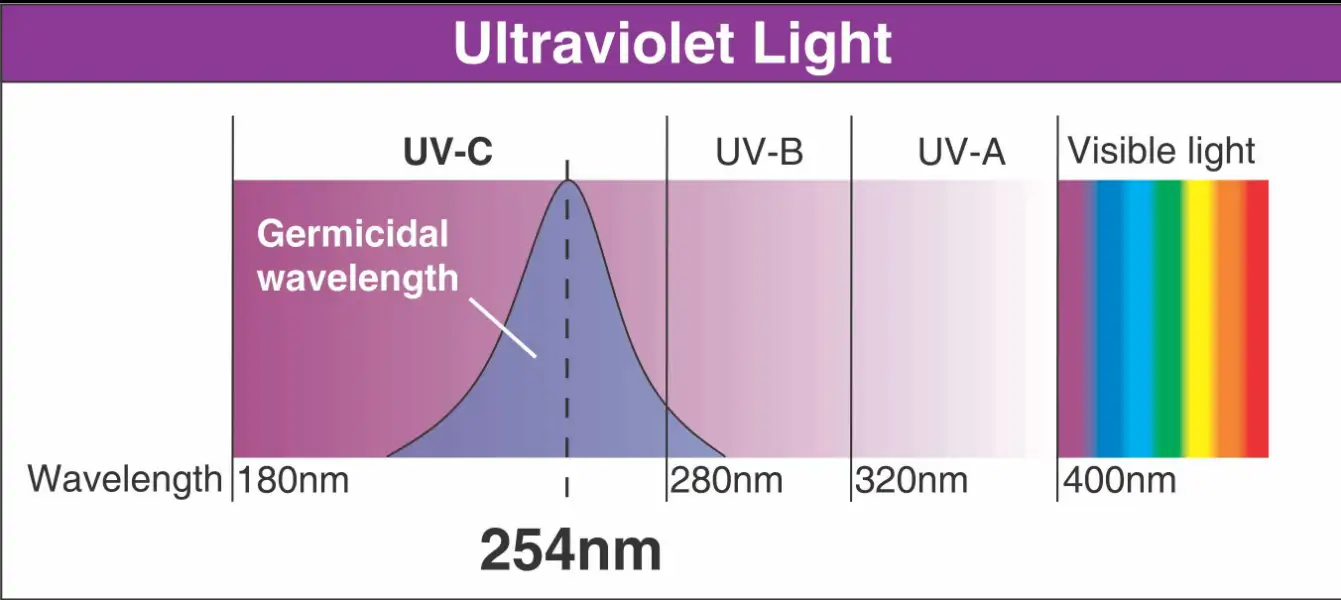
Ultraviolet light is generally divided into:
- UVA: 315–400nm
- UVB: 280–315nm
- UVC: 200–280nm
Among these wavelengths, UVC possesses the strongest germicidal capability because it damages microbial DNA and RNA, preventing microorganisms from reproducing.
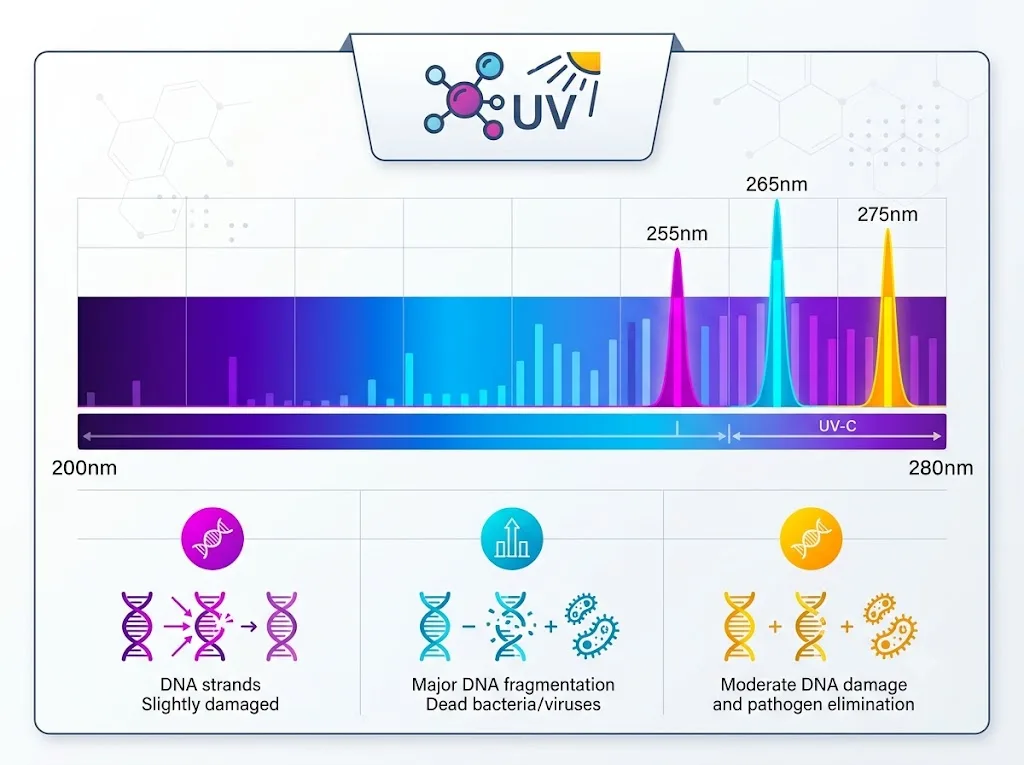
Scientific studies indicate that the DNA absorption peak occurs near 260–265nm, making wavelengths close to this range highly effective for microbial inactivation.
255nm LED: Maximum Germicidal Effectiveness
Advantages of 255nm LED
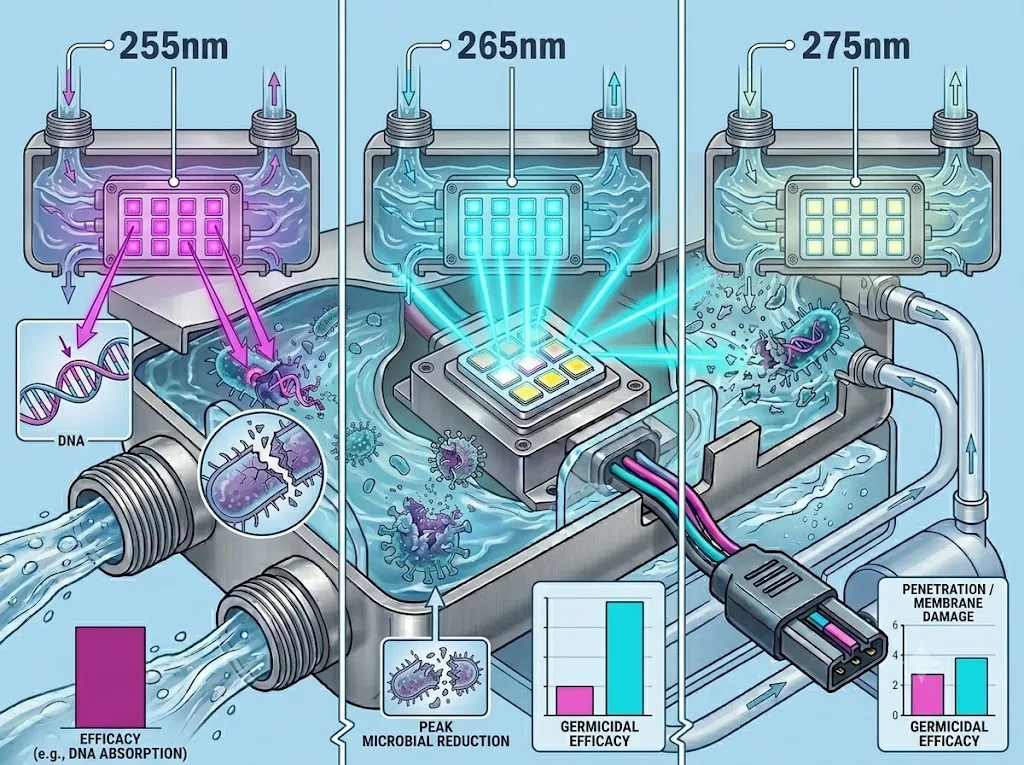
255nm LED is extremely close to the DNA absorption peak.
Benefits include:
- Exceptional germicidal performance
- High DNA and RNA absorption
- Reduced UV dose requirements
- Excellent virus inactivation efficiency
Applications:
- Medical sterilization devices
- Laboratory instruments
- High-end water purification systems
- Semiconductor manufacturing

Limitations of 255nm UVC LED
Despite its effectiveness, 255nm LED faces several challenges:
- Lower optical power output
- Higher production cost
- Lower wall-plug efficiency
- More demanding thermal management
Because of these factors, 255nm led are often reserved for premium disinfection systems where maximum pathogen reduction is required.
265nm UVC LED: The Gold Standard for Disinfection
Among all available UVC wavelengths, many experts consider 265nm UVC LED the optimal balance between efficiency and practicality.
Why 265nm UVC LED Is So Popular
Advantages include:
- Near-peak DNA absorption
- Excellent microbial inactivation
- Better optical output than 255nm
- Improved reliability
- Suitable for most sterilization systems
Common applications:
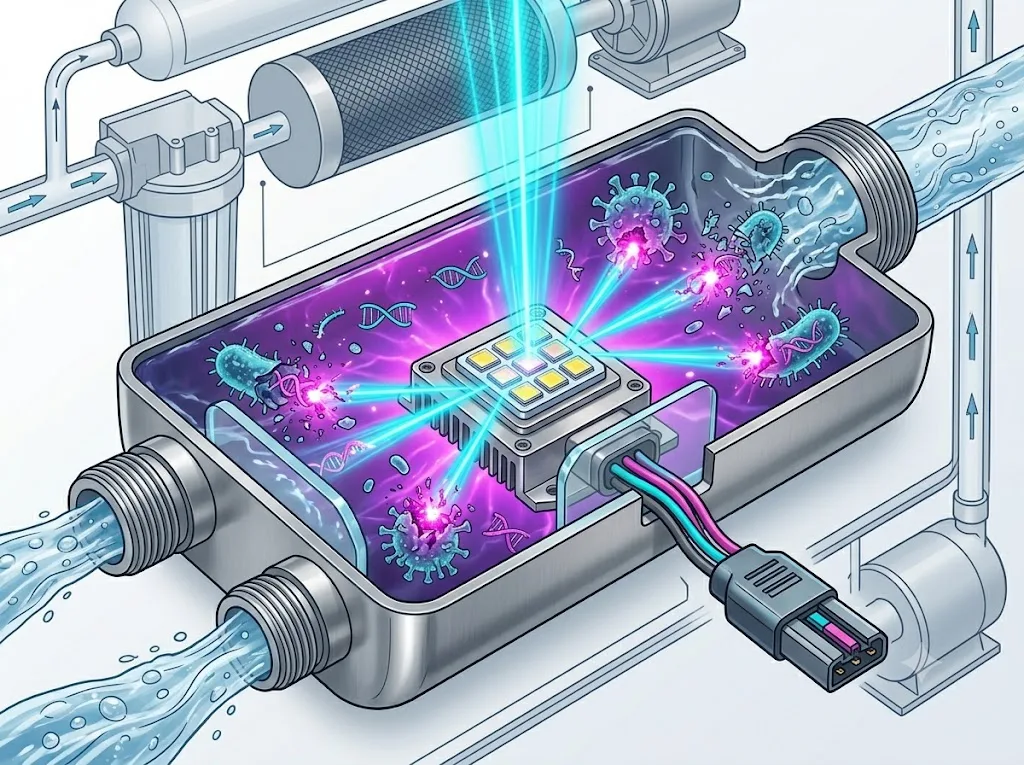
- Drinking water treatment
- Point-of-use water purifiers
- Air purification systems
- Medical disinfection equipment
- Consumer electronics sterilizers
Disinfection Performance
Research consistently shows that 265nm UVC LED achieves extremely high log-reduction rates against:
- E. coli
- Salmonella
- Legionella
- Influenza viruses
- Coronaviruses
This makes 265nm the preferred wavelength for critical disinfection applications.
275nm UVC LED: The Most Commercially Available Option
Today, 275nm UVC LED is the most widely available wavelength on the market.
Advantages of 275nm UVC LED
Benefits include:
- Highest optical output
- Lower manufacturing cost
- Greater energy efficiency
- Longer operational lifetime
- Easier thermal management
Applications include:
- Portable water purifiers
- HVAC systems
- Surface sterilization devices
- Consumer appliances
- RV water purification systems

Limitations
Compared with 255nm and 265nm:
- DNA absorption is slightly lower
- Higher UV dose may be required
- Longer exposure times may be needed
However, increased optical power often compensates for the lower germicidal peak.
Performance Comparison: 255nm vs 265nm vs 275nm UVC LED
| Feature | 255nm | 265nm | 275nm |
|---|---|---|---|
| DNA Absorption | Excellent | Excellent | Very Good |
| Germicidal Efficiency | Highest | Extremely High | High |
| Optical Output | Lower | Medium | Higher |
| Cost | Highest | Medium-High | Lowest |
| Lifetime | Shorter | Good | Longest |
| Availability | Limited | Moderate | Excellent |
| Water Treatment | Excellent | Excellent | Very Good |
| Air Disinfection | Excellent | Excellent | Excellent |
| Consumer Products | Limited | Good | Excellent |
Which Wavelength Is Best for Water Purification?
For UVC LED water purification systems:
Choose 255nm led if:
- Maximum sterilization is required
- Budget is less important
- Medical-grade performance is needed
Choose 265nm if:
- You want optimal germicidal efficiency
- You need balanced performance and cost
- Drinking water safety is critical
Choose 275nm if:
- Cost efficiency is important
- Higher flow rates are required
- Large-scale production is planned
Which Wavelength Is Best for Air Disinfection?
Air disinfection systems benefit from higher optical output.
For this reason:
- 275nm UVC LED is widely used in HVAC systems.
- 265nm UVC LED is preferred for hospitals and medical facilities.
- 255nm UVC LED is mainly used in specialized sterilization equipment.
Future Trends in UVC LED Technology
The UVC LED industry continues to improve:
- Higher radiant power
- Lower manufacturing costs
- Better thermal management
- Longer operational life
As technology advances, 265nm and 275nm UVC LEDs are expected to dominate water purification and air disinfection markets, while 255nm UVC LEDs remain specialized solutions for high-performance applications.
Conclusion
When comparing 255nm vs 265nm vs 275nm UVC LED, there is no single wavelength that fits every application.
- 255nm UVC LED offers the strongest theoretical germicidal effectiveness.
- 265nm UVC LED provides the best balance between disinfection performance and practical implementation.
- 275nm UVC LED delivers the highest commercial value, combining lower cost, higher output, and longer lifespan.
For most water purification systems, air sterilizers, RV water filters, and consumer disinfection products, 265nm and 275nm UVC LEDs are currently the most practical choices.
Understanding these wavelength differences will help manufacturers, engineers, and buyers select the optimal UVC LED solution for their specific disinfection requirements.