Introduction
One of the most common questions consumers ask when choosing drinking water is: what’s the difference between purified water and distilled water?
Both purified water and distilled water undergo treatment processes to remove contaminants, making them safer than untreated tap water. However, the way they are produced, their mineral content, taste, and applications can vary significantly.
Understanding what’s the difference between purified water and distilled water can help homeowners, businesses, RV owners, and water treatment professionals select the best option for their specific needs.
What Is Purified Water?
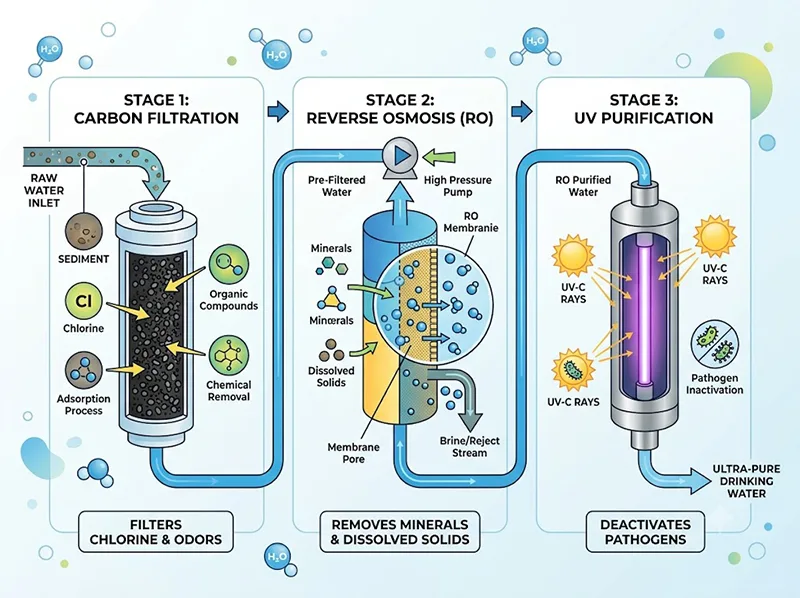
Purified water refers to water that has been processed to remove impurities, contaminants, chemicals, bacteria, viruses, and dissolved solids.
To qualify as purified water, the water must meet strict quality standards and contain very low levels of contaminants.
Common purification methods include:
- Reverse Osmosis (RO)
- Activated Carbon Filtration
- Deionization
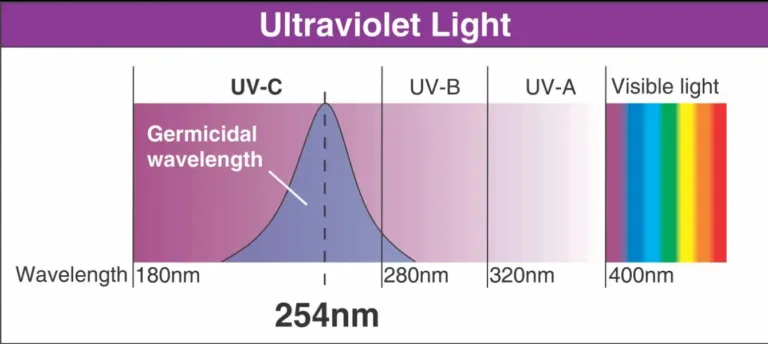
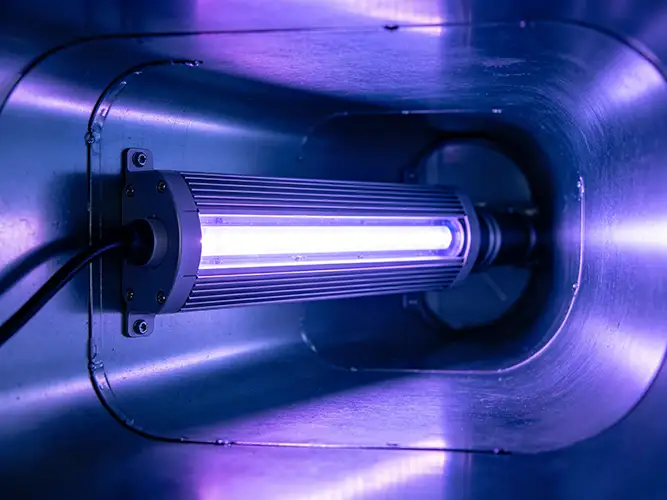
- UV Water Sterilization
- Ozone Treatment
- Ultrafiltration
The goal is to remove harmful substances while often retaining some beneficial minerals.
Benefits of Purified Water
Purified water offers several advantages:
- Improved taste and odor
- Removal of chlorine and chemicals
- Reduction of heavy metals
- Elimination of bacteria and viruses
- Suitable for everyday drinking
Many modern water purification systems combine multiple technologies to achieve high-quality drinking water.
What Is Distilled Water?
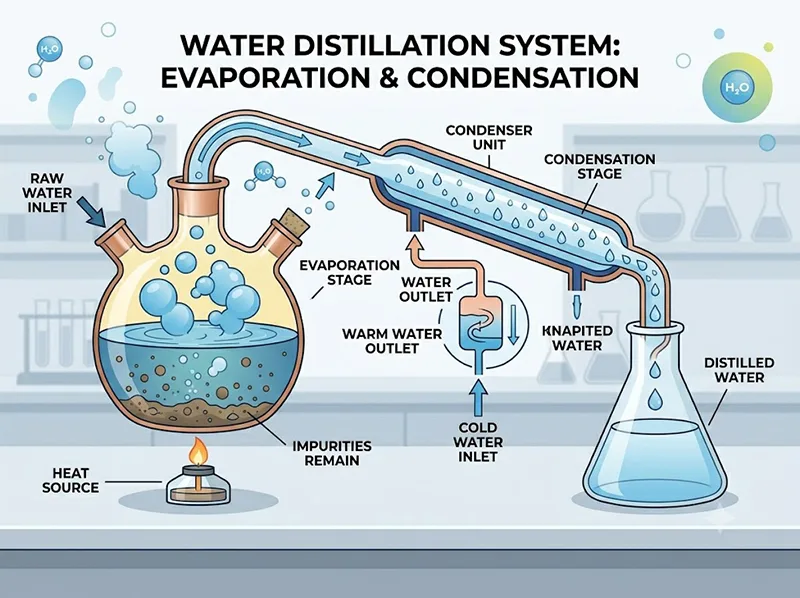
Distilled water is produced through a process called distillation.
During distillation:
- Water is heated until it becomes steam.
- The steam rises and separates from contaminants.
- The steam condenses back into liquid water.
- The collected water is stored as distilled water.
Because most contaminants cannot evaporate with the steam, distillation effectively removes:
- Minerals
- Salts
- Heavy metals
- Bacteria
- Viruses
- Organic compounds
The result is highly purified water with very low total dissolved solids (TDS).
What’s the Difference Between Purified Water and Distilled Water?
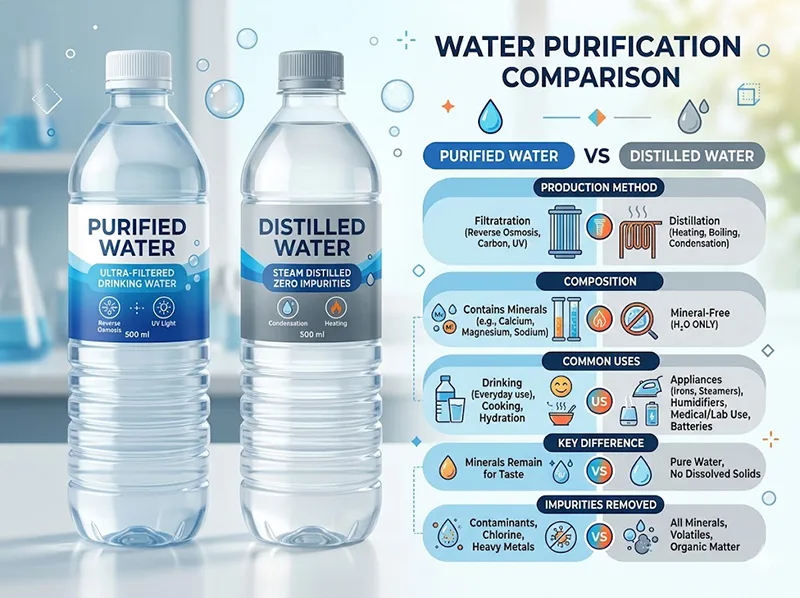
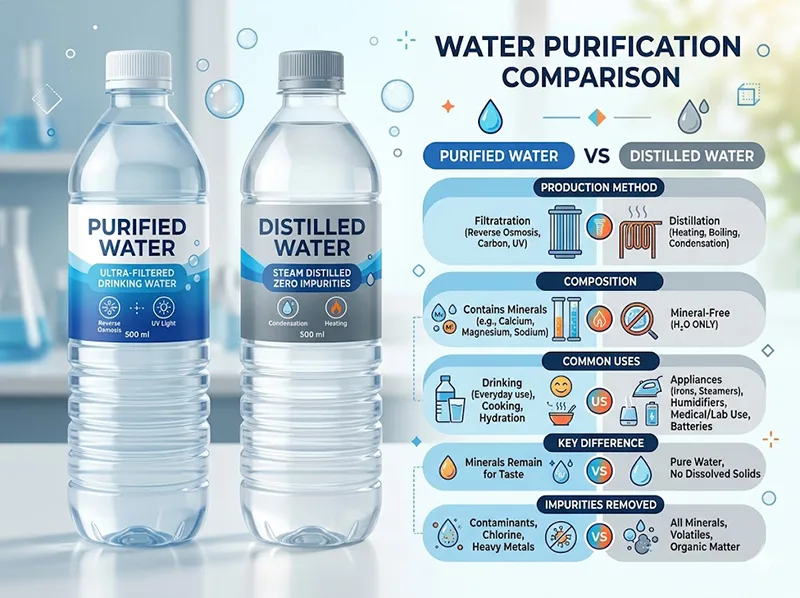
When discussing what’s the difference between purified water and distilled water, the primary distinction lies in the purification process and the final mineral content.
| Feature | Purified Water | Distilled Water |
|---|---|---|
| Treatment Method | Multiple methods | Distillation only |
| Mineral Content | May contain some minerals | Almost no minerals |
| Taste | More natural | Flat or bland |
| Energy Consumption | Lower | Higher |
| Drinking Use | Excellent | Acceptable |
| Appliance Use | Good | Excellent |
| Production Cost | Lower | Higher |
Both types are safe to drink, but they serve different purposes.
Mineral Content: The Biggest Difference
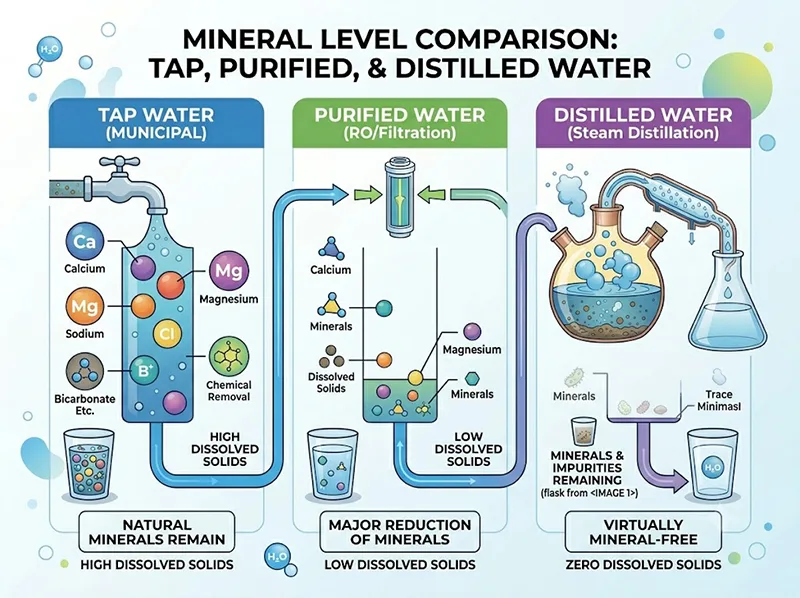
One major factor in understanding what’s the difference between purified water and distilled water is mineral content.
Purified WaterResources
Depending on the treatment process, purified water may still contain small amounts of:
- Calcium
- Magnesium
- Potassium
These minerals can contribute to a more pleasant taste.
Distilled Water
Distillation removes nearly all dissolved minerals.
As a result:
- The taste may seem flat.
- The water is extremely pure.
- It leaves fewer deposits in equipment.
Which Tastes Better?
Taste is often a deciding factor for consumers.
Purified water generally tastes fresher because some minerals remain after treatment.
Distilled water often lacks the mineral profile that gives water its natural flavor.
For daily hydration, many people prefer purified water due to its balanced taste.
This is another important consideration when evaluating what’s the difference between purified water and distilled water.
Which Is Better for Drinking?
For most households, purified water is the preferred option.
Reasons include:
- Better taste
- Lower cost
- Easier availability
- Effective contaminant removal
Distilled water is also safe to drink, but some people find it less appealing due to the lack of minerals.
Health organizations generally agree that both purified water and distilled water can support proper hydration.
Which Is Better for Appliances?
When it comes to appliances, distilled water often has an advantage.
Because it contains almost no minerals, it helps prevent scale buildup in:
- CPAP machines
- Humidifiers
- Steam irons
- Laboratory equipment
- Medical devices
This is one area where the answer to what’s the difference between purified water and distilled water becomes especially important.
Purified Water vs Distilled Water for RVs and Boats
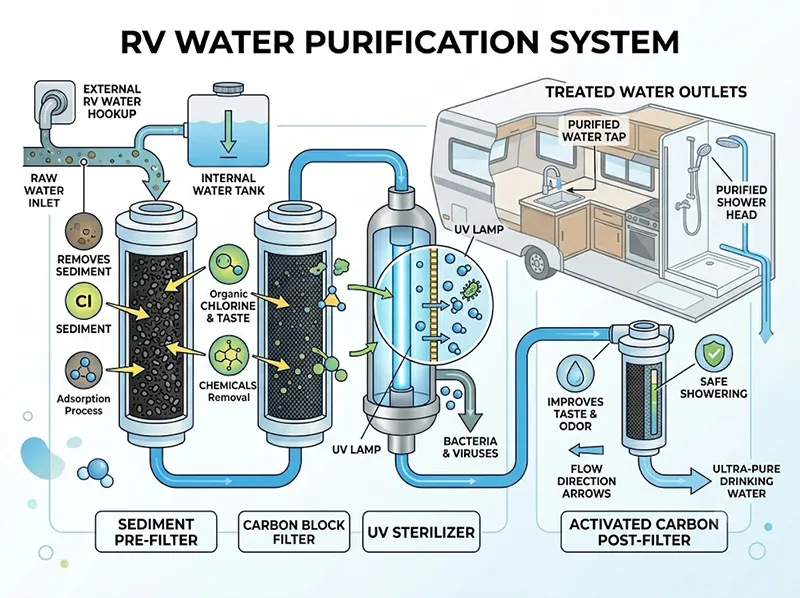
RV owners and yacht operators often need clean drinking water while traveling.
Purified water systems that include:
- Reverse osmosis
- UV sterilization
- Carbon filtration
are commonly used because they provide excellent drinking water while maintaining good taste.
Distilled water, on the other hand, is typically reserved for batteries and specialized equipment rather than everyday consumption.
Environmental Considerations
Purification systems are generally more energy-efficient than distillation systems.
Distillation requires continuous heating, which increases:
- Electricity consumption
- Operating costs
- Carbon footprint
Modern purified water systems often consume less energy while producing larger quantities of drinking water.
Frequently Asked Questions
Is purified water the same as distilled water?
No. Distilled water is a type of purified water, but not all purified water is distilled.
Which is healthier?
Both are safe to drink. Purified water often provides a more pleasant taste due to retained minerals.
Can distilled water replace purified water?
Yes, but many consumers prefer purified water for daily drinking because of taste.
Which is more expensive?
Distilled water usually costs more to produce due to the energy-intensive distillation process.
Conclusion
If you’re wondering what’s the difference between purified water and distilled water, the answer comes down to purification method, mineral content, taste, and intended use.
Purified water is ideal for:
- Everyday drinking
- Cooking
- Household use
- RV water systems
Distilled water is ideal for:
- Medical equipment
- Laboratory applications
- Humidifiers
- Steam irons
- Battery maintenance
what’s the difference between purified water and distilled water
For most consumers seeking clean, safe, and great-tasting drinking water, purified water is often the preferred choice. However, distilled water remains the gold standard when maximum purity and mineral-free performance are required.
By understanding what’s the difference between purified water and distilled water, you can choose the water solution that best meets your health, lifestyle, and equipment needs.