275nm + 395nm UVC Strip, 30 LEDs/m | yoyouv
Product Specifications
Specialized Dual-Wavelength Component
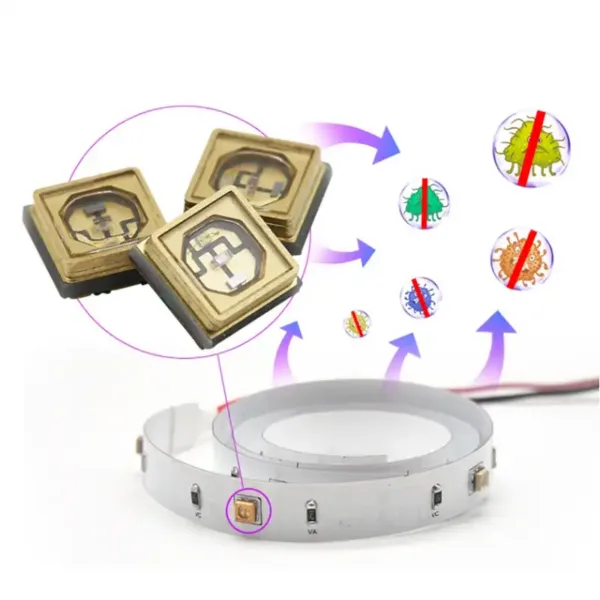
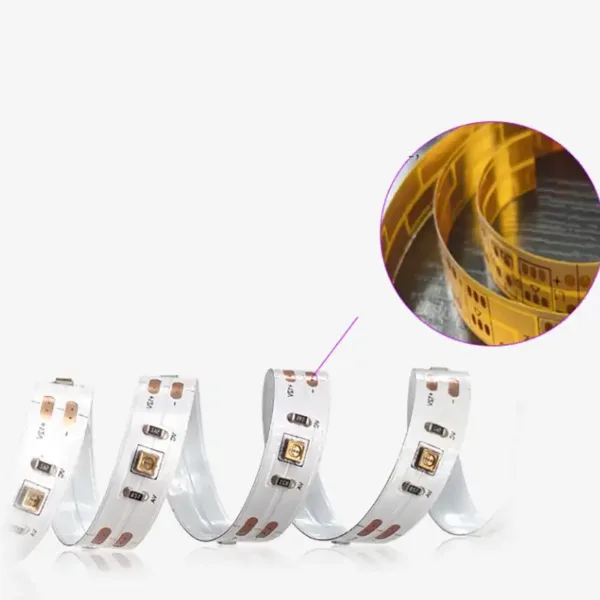
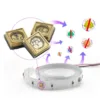
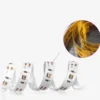
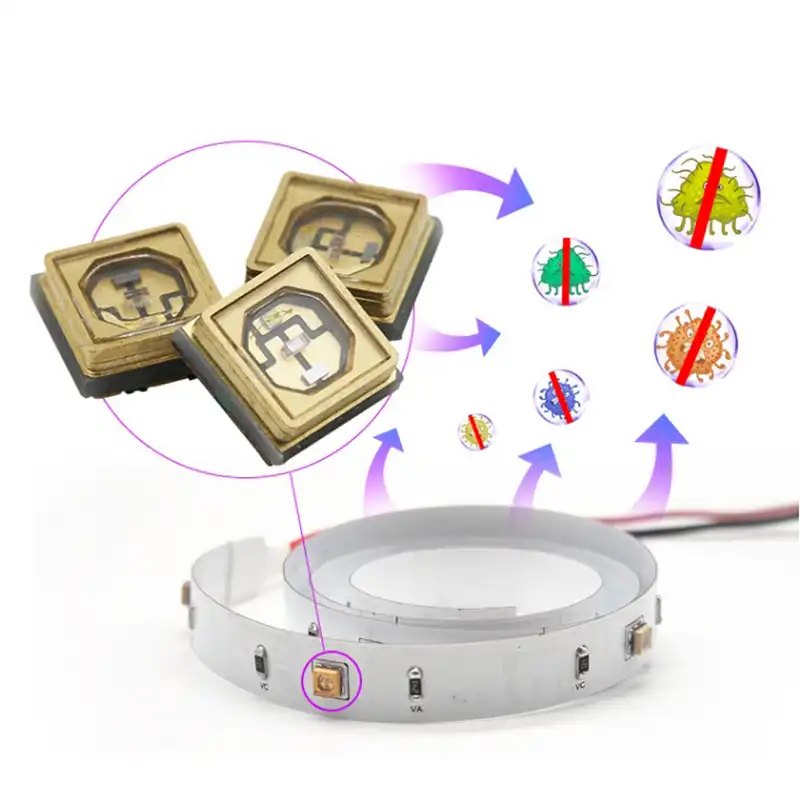
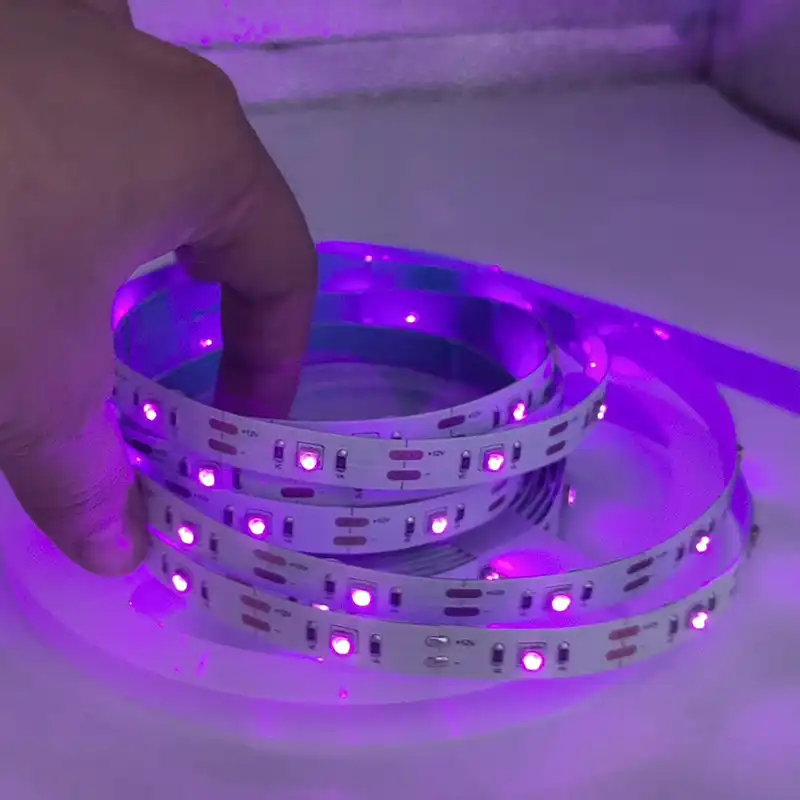
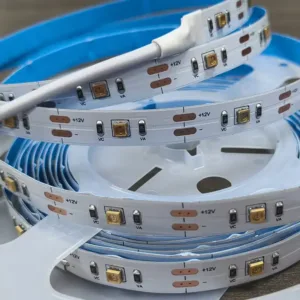
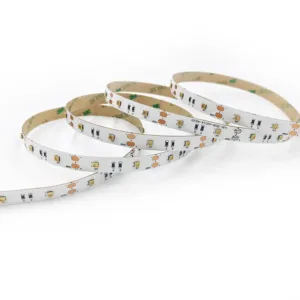
The yoyouv LS-3535-30D-12V-UVC+UVA is a dual-wavelength UVC strip intended for use in manufacture, laboratory settings, and engineering of controlled ultraviolet components. This strip combines 275nm and 395nm wavelengths in one five-meter strip without need for separate boards with UVC and UVA features.
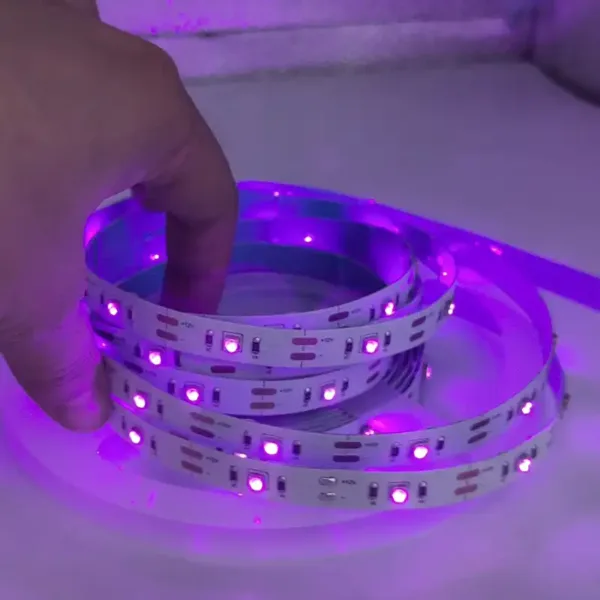
The two wavelengths bands may perform differently in the final installation. 275nm band may be seen as the UVC source, and 395nm band could serve as fluorescent reaction trigger, observation tool, positioning indicator, or status signal depending on presence of suitable materials. The exact role of each band has to be determined separately in the application.
30 LEDs per Meter
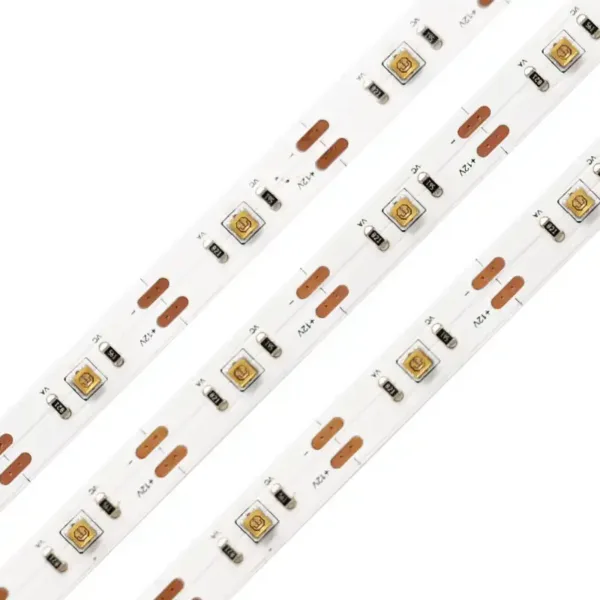
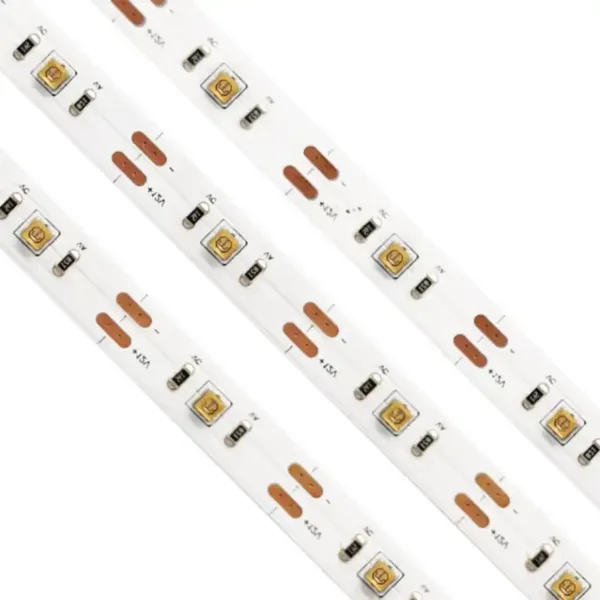
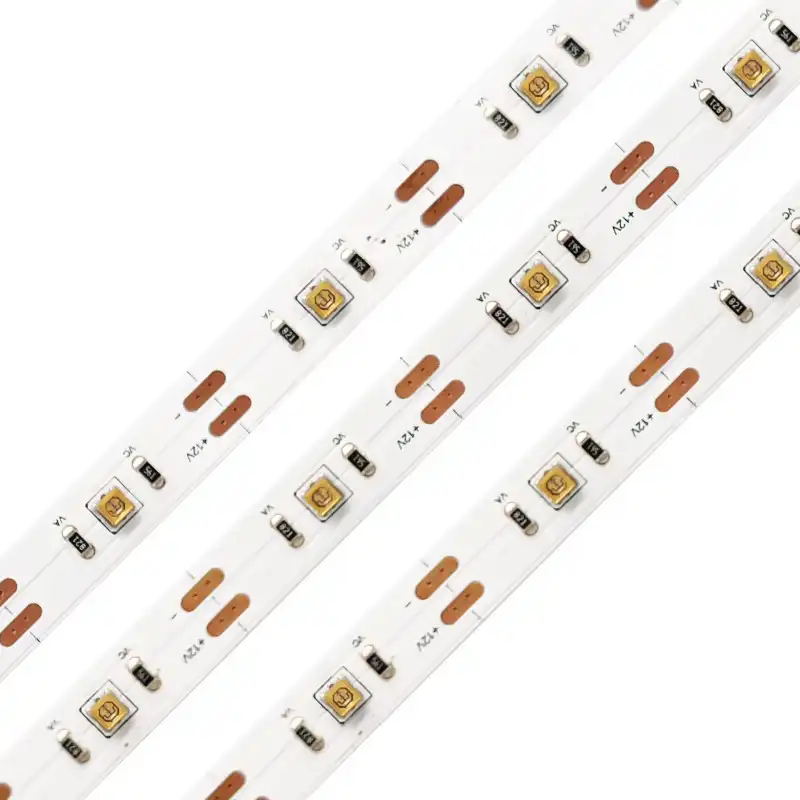
This UVC strip has 30 SMD3535 LEDs per meter of the strip. Lower number of emitters leaves more space between their placements than 60 LEDs per meter variant and gives engineers another way of configuration with different output characteristics, electrical load, and cost considerations.
Uniformity of output will depend on placement of the strip, its distance from working surface, reflectors, chamber geometry, form of the working surface, and operating mode. Therefore prototype measurements should be taken all over the intended target area rather than just at one center point.
Electrical Configuration
UVC strip can be used with 12V or 24V input. Working power of each meter is 7.2W. The ordered input voltage should match the power supply and control circuitry. Application of wrong voltage may damage the strip or prevent its normal operation.
In case of large-scale installations, calculate the load of the connected length of the strip. Cable diameter, connector rating, voltage drop, power injection, switch capacity, and power supply margin should be checked before assembly. Maximum length of single-end feeding is not defined in the specification, thus it should be determined in the course of engineering work.
Physical Format
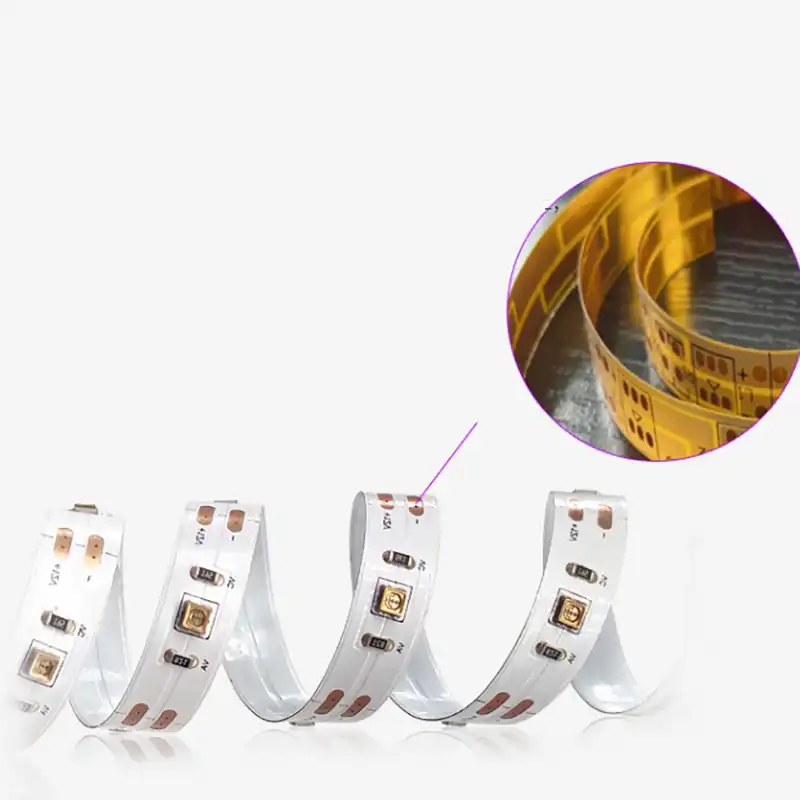
Dimensions of the strip are 5000 × 10 × 4mm. Five-meter format allows integration of the product in suitable linear profile, equipment housing, internal frame, test rig, or enclosed processing area. Emission angle is 120 degrees.
It is wrong to suppose that the board could be cut anywhere. Cutting interval, location of solder pads, minimal bending radius, adhesive layer, and permissible direction of bending have to be confirmed before mechanical design. Avoid bending the board in line with the LED element or solder joint.
Spectrum and Optics
Two wavelengths are defined: 275nm and 395nm. Spectral FWHM is 10nm. Since the two ultraviolet wavelengths will require different sensors and optical elements, measurements of spectrum and irradiance should be performed with instruments adequate for each wavelength range.
UVC strip should be tested behind the same window, cover, sleeve, or protection layer as planned for the final product. Optical elements transparent for 395nm UVA may not be transparent for 275nm UVC.
PCB and Heat Distribution
4oz copper PCB is used for better current distribution and heat dissipation along the board. The process of heat dissipation will also depend on installed length, mounting surface, ambient temperature, enclosure volume, airflow, and duty cycle.
For stable operation mount the UVC strip to suitable heat conductor if needed according to test results. Never connect electric current to long sections that are tightly wound in the roll since the heat can build up between the layers.
Protection and Wiring
Standard waterproof level is IP20. This version is designed for protected assembly and should not be exposed to water, condensation, or conductive contaminants.
Waterproofing construction can be customized. Check the chosen encapsulation, tube, coating, or window for transparency at both wavelengths, thermal properties, sealing integrity, and UV stability.
Connection options are also customizable. Customer can set wire length, connector type, polarity marking, cable exit angle, and power connection position to reduce additional assembly operations.
Technical Specifications
| Specification | Details |
|---|---|
| Brand | yoyouv |
| Model No. | LS-3535-30D-12V-UVC+UVA |
| Wavelength | 275nm + 395nm, customizable |
| LED Chip | SMD3535 |
| LED Quantity | 30 LEDs/m |
| Input Voltage | 12V/24V |
| Working Power | 7.2W/m |
| Size | 5000 × 10 × 4mm |
| Emission Angle | 120° |
| Waterproof Rating | IP20 or customizable |
| Spectrum FWHM | 10nm |
| PCB Copper Thickness | 4oz |
| Connection | Customizable |
Applications of UVC Strip
Enclosed Air-Processing Units
The UVC strip may be considered for air flow channels, recirculation systems, and enclosed processing modules. The testing of such system should take into account the velocity of airflow, duration, distance, shadowing, and ultraviolet exposure level.
Surface-Treatment Chambers
Several linear units may be installed in the closed cabinets or processing units in order to provide distribution of the ultraviolet light in the target area. Shadowed areas may occur due to complex shapes and overlapping parts, so the coverage should be measured in the fully-assembled unit.
Water Treatment Units
The UVC strip may be considered for the sealed water-treatment module, however, the standard IP20 version should not be used for contacting with the water. Compatible insulation, waterproof casing, electric isolation, and heat dissipation path should be provided.
Fluorescence and Process Monitoring
The 395nm band of the UVC strip may be considered for the fluorescence excitation or process monitoring with the compatible fluorescent substances, paint, ink, minerals, or inspection materials. The target substance should be tested under the real optical conditions prior to completing the equipment.
Laboratory and OEM Development
The UVC strip offers a customizable linear platform for the experimental chambers, analytical fixtures, prototypes, and industrial equipment that requires both UVC and UVA functions.
Precautions for Using UVC Strip
Avoid Direct Exposure
The UVC strip should be operated in the properly controlled environment. The direct exposure of the eyes and skin should be avoided and the finished equipment should provide the appropriate protection, interlocks, labels, and controls.
Verify Both Wavelengths Individually
The visible emission of the 395nm LEDs does not guarantee the presence of 275nm emission. The measurement of the wavelength should be done with the properly calibrated device.
Use Proper Voltage
Verify if the ordered UVC strip is the 12V or 24V version prior to connecting it to the power supply. Unplug the power supply prior to soldering, cutting, mounting, testing or connector replacement.
Consider Heat Dissipation in the Full-Length Installation
Measure PCB and enclosure temperatures under the actual working conditions. The aluminum profile or other heat spreading element should be used if it is needed according to the thermal tests.
Follow the IP20 Requirement
Avoid using the standard version of the product in the liquid or moist environments. The waterproofing should be verified for the custom-made product according to the sealing, ultraviolet transmittance, temperature, and material aging.
Test the Performance in the Finished Equipment
The calculation of the treatment efficiency cannot be done on the basis of the wavelength and wattage only. The irradiance and ultraviolet dose should be measured at the target, and then the result should be verified with the proper process, exposure time, geometry, and working conditions.
Frequently Asked Questions
1. Which wavelengths are provided by the product?
The stated wavelengths are 275nm UVC and 395nm UVA. The wavelength configurations can be customized.
2. Which LED package is used?
The product uses the SMD3535 LEDs.
3. How many LEDs are installed per meter?
The UVC strip includes 30 LEDs per meter.
4. Which input voltage should I choose?
It is available for 12V or 24V input. Choose the proper version depending on the equipment power supply.
5. Which is the power consumption?
The stated working power consumption is 7.2W per meter.
6. What are the product dimensions?
The full-size UVC strip has the dimensions 5000 × 10 × 4mm.
7. Is the standard version of the product waterproof?
No. The standard rating is IP20. The waterproofing can be provided on demand.
8. Can the connection be changed?
Yes. The connection method can be customized for the compatible OEM assembly.
9. Does the 4oz PCB make the cooling unnecessary?
No. The copper layer helps to distribute the heat, but the thermal testing and heat conductive mounting element are still required.
10. Can the product be used as the finished disinfection equipment?
It is the integration component. The finished equipment should be verified for optical output, dose, treatment effect, electrical safety, thermal behavior, exposure control, and application requirements.


Reviews
There are no reviews yet.